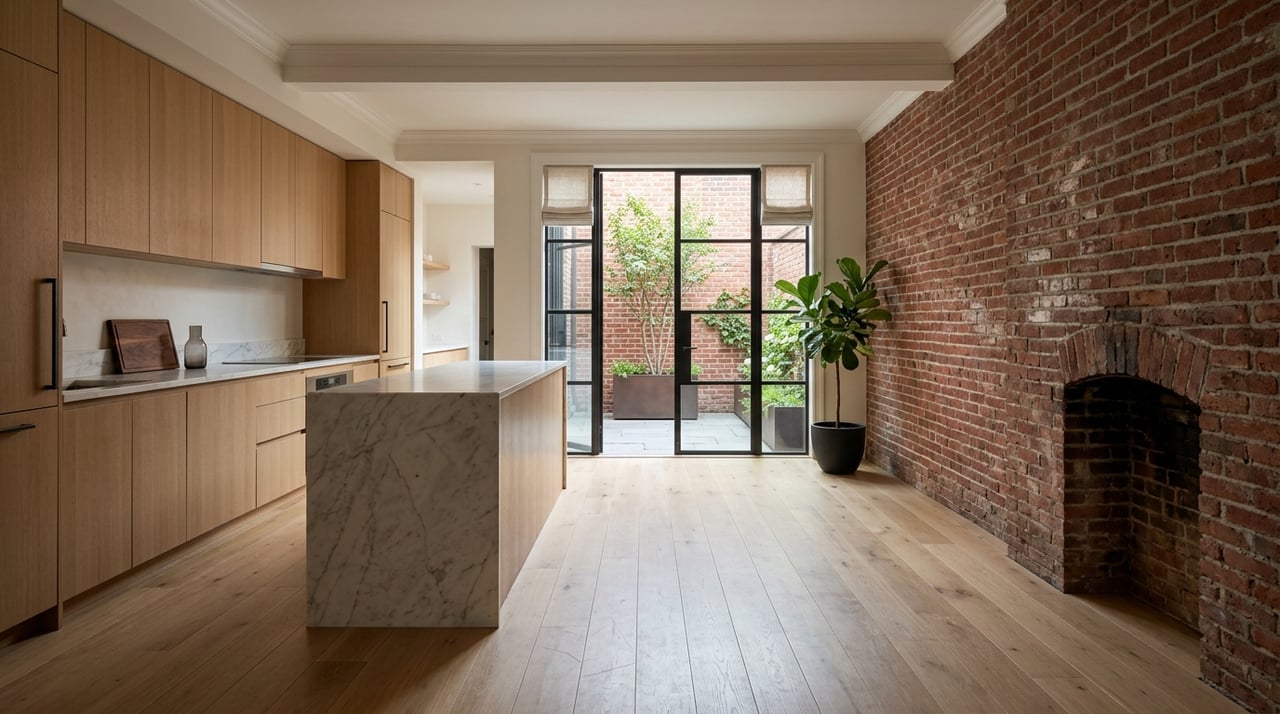
If you are thinking about renovating a Queen Village rowhouse, the smartest choices usually have less to do with adding sheer size and more to do with improving how the home lives every day. In this part of Philadelphia, older homes carry real architectural character, but they also come with narrow widths, deep floor plans, and limits on light and exterior changes. With the right plan, you can protect what makes the house special while making it feel brighter, more functional, and more market-ready. Let’s dive in.
Why Queen Village Renovations Need Care
Queen Village is one of Philadelphia’s classic rowhouse neighborhoods, and some of the city’s oldest rowhouses still stand here. According to the City of Philadelphia’s rowhouse manual, local housing types range from very small trinity-style homes to larger Federal and streetcar-era townhouses. That means no two projects are exactly alike, even on the same block.
What these homes often share is a narrow, deep shape. That layout can create beautiful long sightlines, but it can also leave the middle of the house darker and harder to use. A smart renovation works with those conditions instead of fighting them.
Start With the House’s Original Form
In Queen Village, a strong renovation plan usually respects the home’s basic proportions. Philadelphia’s rowhouse guidance points out that these homes were designed as part of a larger block pattern, so changes to one property can affect the visual rhythm of the street. That matters both for resale appeal and for planning decisions.
Inside the house, keeping a sense of structure often works better than trying to make everything completely open. In many rowhouses, the best flow comes from preserving a clear front room while opening up the middle and rear spaces for kitchen and dining use. That approach can support both daily living and the design rules that apply in the neighborhood.
Keep the Front Room Functional
Queen Village’s Neighborhood Conservation Overlay sets exterior design standards for residential properties. The code also requires a front first-floor habitable room and minimum street-facing window standards. For many owners, that means the front room should remain a real living space, not disappear into a full-width open-plan redesign.
This can actually be a strength. A defined front room gives you a welcoming entry sequence, a quieter place to sit or work, and a more balanced first-floor layout.
Improve Light Without Losing Character
Because rowhouses are deep, daylight is often a top design issue. The city’s rowhouse manual highlights tools like lightwells and skylights over stairwells as ways to bring more natural light into the center of the home. In a Queen Village renovation, those moves can make a noticeable difference without changing the home’s essential character.
You do not always need to add square footage to make the house feel larger. Better light, stronger circulation, and fewer visual barriers can do a great deal of the work.
Focus on High-Impact Interior Updates
When you are deciding where to invest, kitchens and bathrooms are usually the clearest places to start. National remodeling research shows steady demand for both, and those rooms tend to shape how buyers and owners judge the overall condition of a home.
That is especially true in a compact rowhouse, where thoughtful planning matters more than excess space. In Queen Village, quality and layout often carry more weight than size alone.
Smart Kitchen Priorities
Houzz’s 2025 kitchen study found that 64% of homeowners kept the kitchen within its original square footage, while 35% enlarged it. More than half added or upgraded an island, most often for storage and counter space. For a Queen Village rowhouse, that points toward practical upgrades that improve function rather than dramatic expansions.
The same study found homeowners continue to value islands, pullout storage, additional lighting, and neutral or wood-toned palettes. In a narrow city home, these choices can help the kitchen feel orderly, warm, and efficient.
A smart Queen Village kitchen plan often includes:
- Better circulation between the kitchen and dining area
- More built-in storage
- Improved task and ambient lighting
- Durable, high-quality finishes
- A layout that suits the home’s original footprint
According to the 2025 Houzz Home Study, the median kitchen remodel spend was $22,000 in 2024, with major remodels of large kitchens reaching a $55,000 median. Actual costs in Queen Village can vary based on size, systems, finishes, and any historic or exterior review issues.
Bathroom Upgrades That Matter
Bathroom renovations follow a similar pattern. Houzz’s 2025 Home Study reported a $13,000 median spend for primary bathroom remodels overall, with major large-bath remodels at a $25,000 median and small-bath major remodels at $17,000. NAR’s 2025 Remodeling Impact Report also points to rising demand for bathroom renovations.
In a rowhouse, a bathroom does not need to be oversized to feel valuable. Bright lighting, better storage, updated plumbing fixtures, and a cleaner layout can make a small bath feel much more comfortable and current.
Budget for the Work You Cannot See
One of the biggest renovation mistakes in an older Philadelphia home is spending heavily on finishes while underestimating systems. Houzz found that plumbing and electrical were the most common home-system upgrades in 2024. In an older Queen Village rowhouse, those items often deserve attention early in the planning process.
The city’s rowhouse manual also notes that adding roof or wall insulation can be a cost-effective way to reduce energy use. If you are opening walls, updating systems, or reworking kitchens and baths, it often makes sense to address insulation, waterproofing, and heating and cooling at the same time.
A realistic renovation budget may need room for:
- Electrical upgrades
- Plumbing replacement or reconfiguration
- Heating and cooling improvements
- Roof and waterproofing work
- Wall or roof insulation
- Hidden repairs uncovered during demolition
These investments are less visible than countertops or tile, but they often determine whether the finished home actually feels fresh, efficient, and dependable.
Treat Exterior Changes With Caution
Exterior work in Queen Village needs early review. The neighborhood’s /NCO overlay sets rules that can affect façades, roofs, windows, front yards, and other visible elements. The code prohibits vinyl, stucco, or cement board on the front façade, and if the rear of the home is visible from a street, that material must be consistent with the front.
The Philadelphia rowhouse manual also advises owners to think carefully before refacing a rowhouse because it changes the visual impact of the home. In practical terms, preserving brick, trim, stairs, and original proportions is often the safest design path and a strong long-term choice for market appeal.
Roof Deck Planning
Roof decks are attractive in dense urban neighborhoods, but they are not simple add-ons. Queen Village’s overlay includes setback rules for roof decks, requiring them to be set back 8 feet from the front property line or enclosed with a 42-inch parapet. That can affect both design and feasibility.
The city’s rowhouse manual also reminds owners that a deck does not waterproof the roof below it. If you are considering a roof deck, it should be planned as a coordinated roofing, waterproofing, and code-compliance project from the beginning.
Understand Permits and Historic Review Early
Philadelphia requires a building permit before work that changes the interior or exterior of an existing structure, adds to it, or partially or fully demolishes it. Some projects may qualify for EZ permits, including certain interior non-load-bearing alterations and some exterior work, but not every rowhouse renovation will fit that category.
The city’s published review times list 15 business days for residential building alterations or additions and 5 business days for some EZ permit work. Electrical and plumbing permit timing can vary by scope. Even so, permit review is only one part of the schedule.
In real life, preconstruction planning often takes weeks, not days. Design development, contractor bidding, trade coordination, and permit preparation all add time before work begins.
Check Historic Status Before Finalizing Plans
If a property is on the Philadelphia Register of Historic Places, changes may need approval from the Philadelphia Historical Commission. The commission states that its review is focused mostly on façades, roofs, and other exterior features, while interior work falls under its authority only when the interior itself is designated.
Many applications are handled through staff review, but projects involving windows, doors, masonry, decks, or other exterior changes should be checked early. That is one of the most important ways to avoid redesigns and delays.
Build a Smarter Renovation Sequence
A smooth Queen Village renovation usually starts with constraints, not finishes. Before choosing fixtures or paint colors, confirm whether the home sits within the /NCO district, whether it is historically listed, and which parts of the project require separate building, plumbing, or electrical permits.
After that, align the design with the house’s layout and the block’s character. Then price the visible improvements alongside the less glamorous system work. This sequence tends to produce better decisions and fewer surprises.
A practical planning checklist includes:
- Confirm overlay and historic-review status
- Identify exterior elements that may trigger review
- Clarify building, plumbing, and electrical permit needs
- Verify contractor registration and trade licensing
- Set a budget that includes system upgrades and contingencies
- Build extra time into the schedule for revisions and reviews
Think About Renovation Through a Resale Lens
Even if you plan to stay, it helps to think like the next buyer. NAR’s 2025 Remodeling Impact Report found that 46% of buyers are less willing to compromise on home condition. The same report found that 31% of consumers said their remodel took more time than planned.
That creates a useful takeaway for Queen Village owners and buyers. Move-in-ready homes can command attention because they reduce uncertainty, but buying and renovating can still be a strong strategy if you are prepared for the planning, permits, and timeline risk.
In this neighborhood, the features most likely to stand out are often straightforward: better flow, more daylight, a well-finished kitchen, at least one updated bath, preserved historic details, dependable systems, and compliant outdoor space when available. Those are the improvements that tend to make an older rowhouse feel both elevated and livable.
If you are weighing a purchase, pre-sale refresh, or full renovation strategy in Queen Village, a measured plan can protect both your budget and the home’s long-term value. For discreet guidance on buying, selling, or positioning a Philadelphia property with care, request a private consultation with Black Label Keller Williams.
FAQs
What makes a Queen Village rowhouse renovation different?
- Queen Village rowhouses are often narrow and deep, with limited interior light and exterior design rules under the neighborhood’s Conservation Overlay, so renovations usually need to balance function, character, and code compliance.
What permits are usually needed for a Queen Village renovation?
- Philadelphia requires a building permit for work that changes the interior or exterior of an existing structure, adds to it, or involves partial or full demolition, and separate electrical or plumbing permits may also be required depending on the scope.
What exterior changes should Queen Village homeowners check early?
- You should review any plans involving windows, doors, masonry, roof decks, façades, roofs, or front-yard and street-facing elements because the /NCO rules and possible historic review can affect design and approvals.
What renovation upgrades add the most practical value in a Queen Village rowhouse?
- Kitchens, bathrooms, lighting, storage, plumbing, electrical, insulation, waterproofing, and heating and cooling improvements are often the most useful places to invest in an older rowhouse.
What should buyers know before purchasing a Queen Village fixer-upper?
- Buyers should understand that permit timelines are only one part of the process and that design review, contractor coordination, hidden repairs, and possible historic approvals can all affect the final budget and schedule.