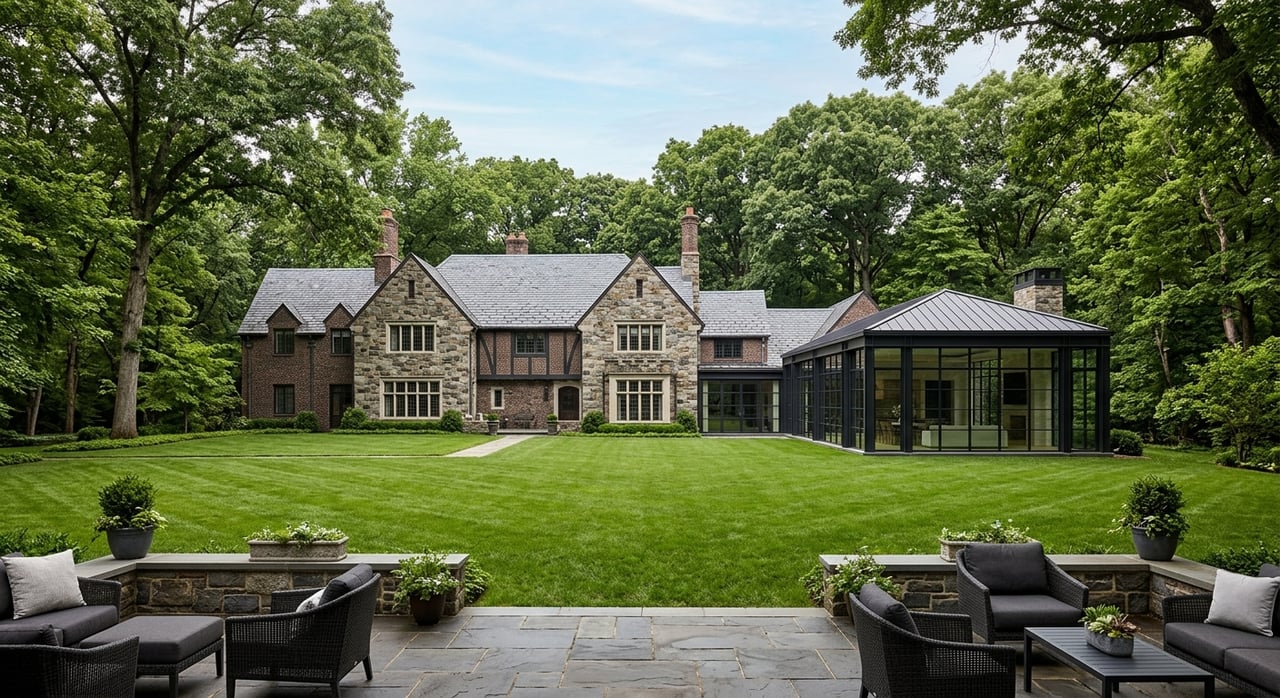
If you are searching for an estate property in Gladwyne, the house is only part of the story. The land often determines how private the home feels today and how much flexibility you may have tomorrow. When you know how to read usable acreage, zoning, tree cover, and site constraints, you can judge a property with much more confidence. Let’s take a closer look.
Why land matters in Gladwyne
In Gladwyne, privacy is often created by the site itself rather than by square footage alone. Lower Merion Township places strong emphasis on tree canopy, biodiversity, green infrastructure, and open-space planning, with attention to woodlands, watersheds, topography, and scenic roads.
That matters because two properties with similar acreage can offer very different experiences. One may feel sheltered and quiet because of mature screening and grade changes, while another may feel more exposed even if the lot size looks impressive on paper.
For estate buyers, this is why the first question is not just, "How big is the lot?" A better question is, "How much of this land is truly usable, private, and adaptable?"
Start with usable acreage
A large parcel does not always translate into meaningful flexibility. In Lower Merion, zoning classification, setbacks, impervious-surface limits, easements, floodplain areas, and utility conditions all shape what you can realistically do with the site.
That means the best estate lots are usually the ones that offer depth from the road, mature landscape screening, and a siting pattern that protects the rear grounds. If you are comparing luxury listings, that practical usability often matters more than the headline acreage number.
Check the zoning district first
Before you think about adding a pool, expanding the house, or reworking the driveway, confirm the property’s zoning district. Lower Merion’s guidance for residential additions and expansions specifically directs buyers to start there, then review setbacks and impervious limits to understand the buildable envelope.
Useful single-family benchmarks in Lower Merion include:
- LDR1: 200-foot minimum lot width, 90,000 square feet minimum lot area, 20% maximum impervious surface, 100-foot front yard setback
- LDR2: 150-foot minimum lot width, 45,000 square feet minimum lot area, 21% maximum impervious surface, 50-foot front yard setback
- LDR3: 100-foot minimum lot width, 15,000 square feet minimum lot area, 28% maximum impervious surface, 40-foot front yard setback
- LDR4: 60-foot minimum lot width, 7,500 square feet minimum lot area, 45% maximum impervious surface, 25-foot front yard setback
These standards can change how generous a lot really feels. A parcel may appear expansive, but the permitted envelope for building and site improvements can still be narrower than expected.
Read the siting, not just the survey
Once zoning is clear, pay attention to orientation, tree cover, and topography. You want to understand how the property lives across the day and through the seasons.
A few questions can quickly sharpen your evaluation:
- How much sun reaches the rear yard or a potential pool area?
- Which parts of the lot are screened by mature trees or changes in grade?
- Where would terraces, lawns, or outdoor entertaining spaces feel most protected?
- Which edges of the property are open to neighboring views or road exposure?
In a place like Gladwyne, these factors can do as much for privacy as gates or walls. The landscape itself is often the defining layer.
How setbacks affect privacy
Setbacks shape more than compliance. They also influence how the home sits on the land and how visible the structure and grounds feel from the street.
Lower Merion’s code allows a predominant setback when three or more principal buildings are within 200 feet on the same side of the street. In practical terms, the established streetscape may influence where a house relates to the road, even beyond the base setback number.
Corner lots and parcels with multiple frontages deserve extra scrutiny. More frontage can mean more visual exposure, which may reduce the private feel of side yards, rear outdoor areas, or future exterior improvements.
Driveway design can limit future options
Access is another detail that buyers sometimes underestimate. In Lower Merion, driveways are limited to 10 feet in width at the property line to the building setback, and two driveways on one lot must be separated by 30 feet.
There is also a useful nuance for shared driveways. If a shared driveway is under 100 feet, the shared portion does not count toward impervious surface.
On an estate lot, these rules can support an elegant arrival sequence. At the same time, they may limit later plans for expanded parking, motor court changes, or alternative access patterns.
Historic district review can shape plans
Some Gladwyne properties fall within the Gladwyne/Merion Square Historic District, which was designated in 1980. If a parcel is inside that district, most exterior alterations visible from the public way are reviewed by HARB.
That review can apply to additions, window replacement, roofing, hardscaping, fences, and walls. Plantings are not reviewed, but many built features visible from the street are, and the process may result in approval, denial, or a delay of up to 90 days.
If you are buying with renovation plans in mind, this is a meaningful part of due diligence. A property may still be a strong fit, but the path to change can be more procedural than a buyer expects.
Improvement potential starts with impervious coverage
In Lower Merion, impervious surface is defined broadly. It includes roofs, driveways, sidewalks, patios, decks, sport courts, and pools.
This matters because even modest-looking site changes can affect permit requirements. Any increase in impervious surface can trigger a zoning permit, and larger projects may create additional layers of review.
For expansions that disturb more than 1,500 square feet of land, the township says an engineered runoff-and-erosion-control plan and stormwater management system may be required. If you are considering a major terrace, pool, or addition, this should be part of your planning from the start.
Easements, sewer, and septic need early review
Before design work begins, Lower Merion advises buyers to identify any on-site sewer system, sewer or stormwater easements, and any floodplain area. No portion of a building may sit over those areas.
Structural alterations also require plans sealed by a Pennsylvania-licensed architect or professional engineer, and the township may require a survey. For estate properties, that means your wish list should be tested against the site before assumptions take hold.
Sewer status is especially worth confirming in Gladwyne. Lower Merion’s adopted 2026 through 2031 capital program includes a Gladwyne/Villanova Area Sanitary Sewer Extension, noting a need that arose after a failed on-lot septic system with no suitable replacement area. That does not define every parcel, but it does show why sewer service, septic status, and related easements should be checked early.
Tree cover adds value and complexity
Mature trees are often one of the most attractive features of a Gladwyne estate. They can create screening, frame views, soften sound, and reinforce the sense of separation that many buyers want.
They can also complicate site work. Under wooded-lot standards, removing more than 25% of viable trees with a caliper of 6 inches or more triggers replacement planting, with replacement trees required to be native deciduous shade trees, though some evergreen substitution is allowed.
If your plans include clearing for a pool, an addition, or a view corridor, this can create both cost and timing considerations. In other words, the same canopy that makes a property feel special may also affect how easily the site can change.
Floodplain status changes the equation
Floodplain conditions deserve serious attention when evaluating estate land. In Lower Merion, improvements in the Floodplain District are subject to floodplain overlay rules.
The township states that zoning permits are required before grading, fencing or walls, storage, play structures, accessory structures, or any increase in impervious surface within the floodplain. If part of a property falls in that area, your options may be more limited than the lot size suggests.
This is one of the clearest reasons to focus on usable acreage rather than paper acreage. Land that cannot support your intended improvements may still have value, but it should be valued differently.
A practical checklist for estate buyers
When you are comparing high-end properties in Gladwyne, a disciplined first-pass review can save time and reduce surprises. The goal is to understand not just whether you like a property, but whether it fits your long-term plan.
A strong due-diligence file should include:
- Exact zoning district
- Any applicable overlays
- Current survey
- Easement information
- Floodplain review
- Topography review
- Utility and sewer confirmation
- Septic status, if applicable
- Tree inventory or arborist review for heavily wooded lots
Montgomery County offers GIS data that can help with early research, but the county states that it is provided as-is and is not a legal description. It is best used as a starting point, not the final word.
Questions worth asking at a showing
At an estate showing, the most useful questions are often very specific. They can quickly reveal whether the property’s privacy and future potential align with your goals.
Consider asking:
- What is the exact zoning district?
- Are there any overlays affecting the property?
- Is the home inside a historic district?
- How much of the lot is already covered by impervious surface?
- Are there sewer, stormwater, or access easements affecting the buildable area?
- Is the property on public sewer or septic?
- Would plans for a pool, terrace, addition, garage rework, driveway change, or fence line trigger zoning, grading, runoff, floodplain, or historic review?
These are the questions that move the conversation from appearance to substance. For luxury buyers, that distinction often protects both lifestyle and long-term value.
The best Gladwyne lots balance privacy and possibility
The strongest Gladwyne estate properties usually do two things well. They protect your privacy now through siting, landscape structure, and distance from the road, while still leaving a realistic path for future improvements.
That combination is not always obvious during a first showing. It comes from reading the lot carefully, understanding township rules, and testing your plans against the actual site conditions.
If you are weighing a Gladwyne estate purchase and want a discreet, well-prepared perspective on land, privacy, and long-term fit, Black Label Keller Williams can help you evaluate the property with clarity and care.
FAQs
What should you review first on a Gladwyne estate lot?
- Start with the exact zoning district, then review setbacks, impervious-surface limits, and any overlays that affect the buildable envelope.
How does tree cover affect privacy on Gladwyne properties?
- Mature tree cover can provide natural screening and support privacy, but wooded-lot rules may also affect removal and replacement if you plan major site changes.
Why does usable acreage matter more than total acreage in Gladwyne?
- Usable acreage reflects what the site can realistically support after accounting for zoning, setbacks, easements, floodplain areas, topography, and utility constraints.
How can a historic district affect renovations in Gladwyne?
- If a property is in the Gladwyne/Merion Square Historic District, many exterior changes visible from the public way may require HARB review and can be approved, denied, or delayed.
What site improvements can trigger permits in Lower Merion?
- Increases in impervious surface, grading, additions, pools, terraces, driveway changes, fences, walls, and floodplain-area work may all require zoning or related review depending on the project.
Why should you confirm sewer or septic status on a Gladwyne property?
- Sewer service, septic conditions, and related easements can affect where you build and how easily future improvements can move forward.