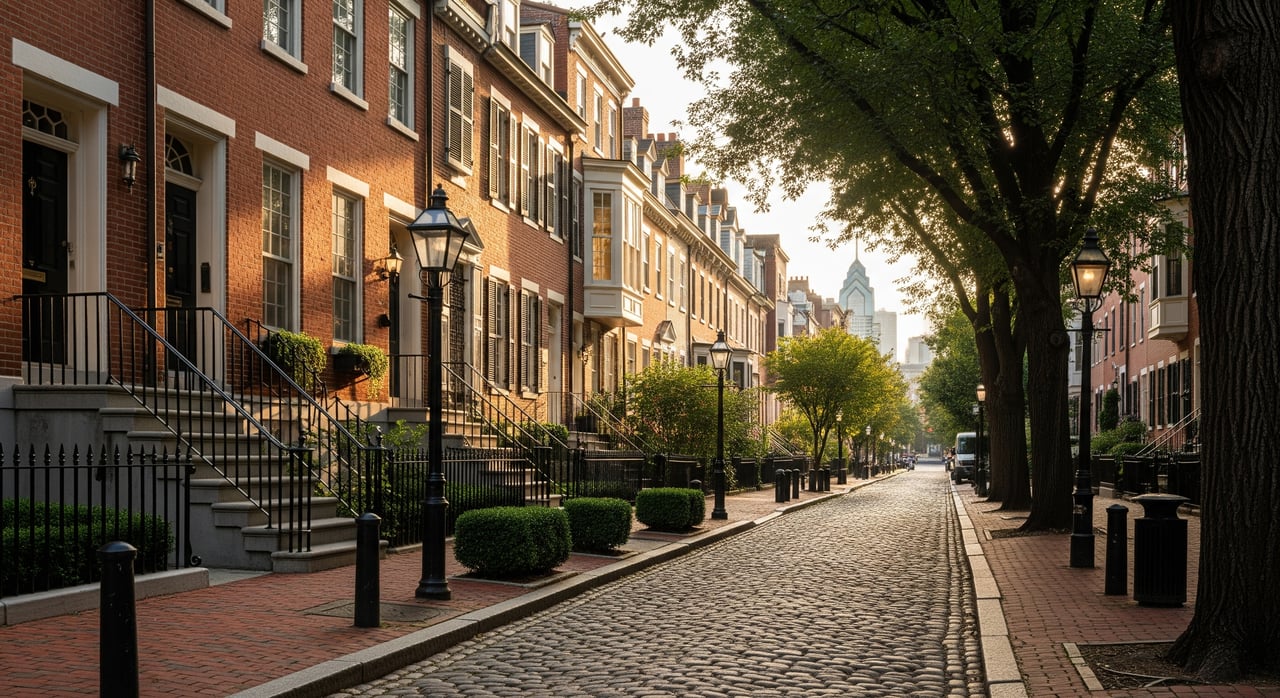
Trying to decide between Queen Village and Society Hill? You’re not alone. Both offer historic charm, excellent walkability, and Center City access, yet they feel very different day to day. In this guide, you’ll compare lifestyle, housing types, renovation realities, parking, and practical due diligence so you can choose with confidence. Let’s dive in.
Queen Village vs. Society Hill at a glance
Character and pace
Queen Village feels lively and eclectic, with a mix of small businesses, independent shops, and restaurants near South Street and Third Street corridors. You’ll find an active neighborhood rhythm and pockets that buzz in the evenings and on weekends. Society Hill reads quieter and more residential, with a refined historic presence and calmer streets. Many buyers choose based on the pace of life they want on their block.
Streets and buildings
Both neighborhoods feature 18th and 19th century brick rowhomes, but the look and feel vary. Queen Village blocks can shift quickly, with renovated homes beside modern infill and occasional storefronts or alleyways. Society Hill showcases a more uniform historic fabric, with Federal and Georgian details, cobblestones, and some planned mid‑century condo complexes that punctuate the skyline.
Homes, condos, and ownership costs
Rowhomes: independence and upkeep
Owner‑occupied rowhomes dominate both neighborhoods. You typically will not have an HOA, which means you control your property decisions but also carry full responsibility for exterior and interior maintenance. On select blocks you might find civic or neighborhood associations that coordinate local initiatives. These are generally voluntary rather than fee‑based.
Condos and high‑rises: convenience with fees
Condominiums and conversions are available in both areas, with Society Hill offering more notable mid‑century mid‑ and high‑rise options. Expect HOA or condo fees that fund building insurance, exterior maintenance, reserves, and any amenities or staffing. The tradeoff is predictable maintenance and convenience in exchange for monthly assessments and building rules.
Historic districts: what to expect
Large portions of Society Hill and parts of Queen Village sit within locally regulated historic districts or are listed on the National Register. Exterior changes like façades, windows, rooflines, and additions often require approvals or a Certificate of Appropriateness. This can add time and cost up front, while also supporting long‑term desirability and price stability. Always confirm a property’s designation and permitting requirements with the Philadelphia Historical Commission before budgeting exterior work.
Walkability, dining, and culture
Queen Village scene
Queen Village places you near South Street and the Italian Market area, with casual, contemporary dining and a lively bar and retail mix. The atmosphere skews energetic in the evenings and on weekends. If you want everyday conveniences and an active neighborhood feel, many blocks here deliver.
Society Hill scene
Society Hill’s ambiance leans calm and historic, with proximity to Independence National Historical Park and Washington Square. Dining trends toward sit‑down and established restaurants. The smaller blocks, parks, and historic streets support a slower pace on many evenings.
Parking and getting around
Street or permit parking is a common reality in Queen Village, especially for rowhome owners without driveways or garages. Society Hill offers more properties with off‑street solutions like garages or assigned spaces in certain buildings, though availability varies block by block. Both neighborhoods are highly walkable with strong access to Center City transit; plan your commute with SEPTA route options and your preferred travel mode.
Renovation and inspection realities
For historic rowhomes
Older brick rowhomes often warrant close attention to masonry, foundation settlement, parapet and roof conditions. Mechanical systems may include older wiring, galvanized plumbing, or aging HVAC. Budget for moisture management in low basements, and ask about grading, waterproofing, and any sump or backup systems. In historic districts, windows and exterior woodwork may require specialized repairs and historically appropriate materials.
For condos and cooperatives
Review the building envelope and major systems, including roofs, façades, elevators, and boilers or central HVAC. Request the operating budget, reserve study, insurance summary, recent dues history, and meeting minutes to assess financial health. Look for trends like fee increases, major capital projects, or discussions about special assessments. Read rules on rentals, pets, and subletting to ensure they align with your plans.
Energy and modernization
Historic charm and energy performance can coexist, but it takes planning. Ask about insulation, HVAC upgrades, and window performance, including historic‑compliant retrofit options. New systems and thoughtful improvements can meaningfully change comfort and operating costs.
Lifestyle fit: which neighborhood suits you?
- Choose Queen Village if you want a lively, mixed‑use feel with quick access to casual dining, independent shops, and an active street scene.
- Choose Society Hill if you prefer quieter, tree‑lined streets with preserved historic architecture, parks, and a more refined ambiance.
- Either can be right if you value Center City walkability and historic character. Many buyers focus on specific blocks for noise levels, tree canopy, and proximity to their favorite park or restaurant.
Buyer checklist for both neighborhoods
For any property
- Visit target blocks at different times of day and week to gauge noise and pace.
- Review recent comparable sales with a licensed Realtor to benchmark value.
- Check flood risk, including FEMA maps and local stormwater considerations, and ask about any basement history.
- Confirm school catchment and options through the School District of Philadelphia and independent rating resources.
For rowhome purchasers
- Schedule a full home inspection plus specialized evaluations for masonry, roofing, sewer lines, and HVAC.
- Request documentation on past renovations, permits, and any open code violations.
- Verify whether the property lies in a historic district and understand exterior work requirements.
- Confirm parking options and any neighbor agreements involving alleys or shared access.
For condo purchasers
- Obtain HOA documents: declaration, bylaws, recent financials, reserve study, insurance summary, and 12–24 months of meeting minutes.
- Ask about major capital projects in planning and how they will be funded.
- Review rental and pet policies and any recent or pending special assessments.
- Confirm unit boundaries for maintenance responsibilities and the status of any exclusive‑use areas like storage or parking.
Local resources to consult
- Philadelphia Historical Commission for historic district maps, approvals, and permits.
- City of Philadelphia Department of Records and Planning for property records, zoning, and permit history.
- Philadelphia Office of Emergency Management and FEMA Flood Map Service Center for flood risk.
- School District of Philadelphia and GreatSchools for school boundaries and enrollment details.
- SEPTA trip planner for route options and commute planning.
- Neighborhood associations: Queen Village Neighbors Association and Society Hill Civic Association for block‑level context and community updates.
Considering a move?
If you’re weighing Queen Village against Society Hill, on‑the‑ground nuance matters. The right block can balance your wish list for historic charm, daily convenience, and long‑term value. Our team pairs quiet, off‑market access with condo expertise and careful rowhome due diligence to help you buy with confidence.
Ready for a discreet conversation about your next move? Request a Private Consultation with Black Label.
FAQs
What is the main lifestyle difference between Queen Village and Society Hill?
- Queen Village feels more lively and mixed‑use near dining and shops, while Society Hill is generally quieter with a more uniform historic residential feel.
How do rowhomes compare to condos in these neighborhoods?
- Rowhomes offer independence without HOA fees but require full maintenance, while condos trade monthly assessments and rules for convenience and shared upkeep.
Do historic district rules affect renovations in Queen Village and Society Hill?
- Yes. Many properties fall under historic oversight, so exterior changes often need approvals, which can add time and cost but support long‑term neighborhood character.
Is parking easier in Society Hill than in Queen Village?
- Often, yes. Society Hill has more properties with garages or assigned spaces, though availability varies by block; Queen Village relies more on street or permit parking.
What inspections should I prioritize for a historic rowhome?
- In addition to a full home inspection, consider masonry, roof, HVAC, and a sewer line camera, plus moisture and drainage evaluations in the basement.
What documents should I review before buying a condo here?
- Ask for the HOA declaration, bylaws, financials, reserve study, insurance summary, and 12–24 months of meeting minutes, along with rules on rentals, pets, and assessments.